
Wrong grade or temper
Strength, corrosion, or weldability miss the function — first articles fail or field life shortens when only a family name (e.g. “aluminum”) was quoted.
Material choice drives strength, weight, corrosion resistance, machinability, cost, and lead time. Shortlist metals and engineering plastics here — then confirm grade and process fit through DFM.
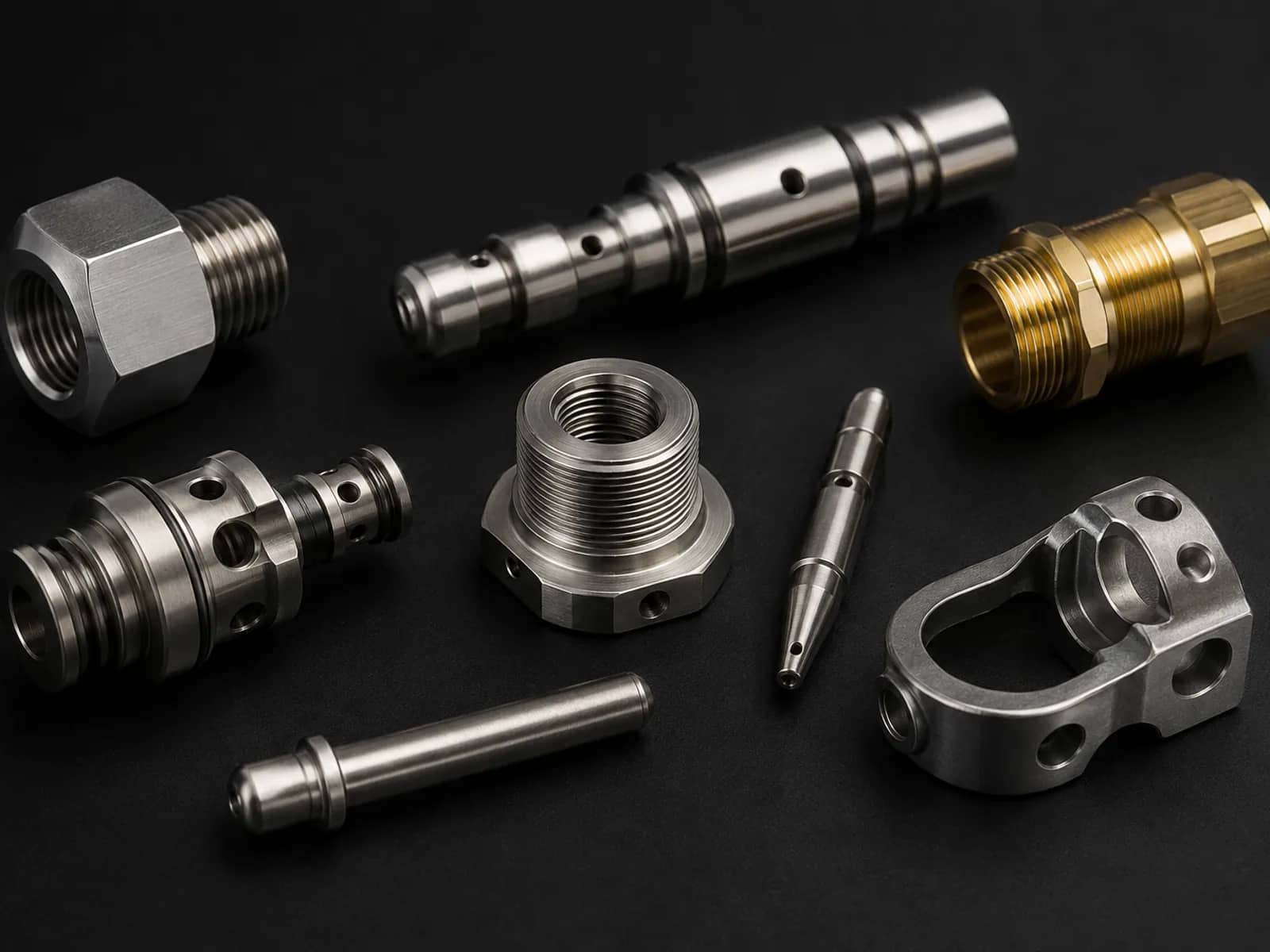
Use this guide when you are choosing a grade family for CNC milling or turning and need a shortlist before locking the drawing.
Pick from the primary function first (strength, weight, temperature, chemistry, insulation, cost), then narrow to two or three grades. Total part cost includes stock price and machinability, setups, finishes, and inspection — titanium and PEEK are often expensive in both stock and cycle time.
Defaults to plan against: metals commonly deliver ±0.10 mm when the drawing is silent; plastics are typically about ±0.05 mm unless DFM confirms tighter limits. Prefer ISO 2768-m for general features. When the project requires documentation, ask for MTR, CoC, and heat/lot linkage on the RFQ — RoHS / REACH statements apply when the specified grade and supply chain support them.
Deep dives for each family live on the material landings below. Soft aluminum marks under hard jaws; stainless work-hardens; copper alloys need sharp geometry and chip control; plastics need sharp tools and should not inherit metal tolerance bands without review.
6061, 7075, and related alloys for structural and enclosure parts.
Carbon, alloy, stainless, and tool steels with process planning for hardness.
Copper, brass, and bronze for conductivity and thermal parts.
POM, PEEK, PTFE, nylon, and other engineering polymers.
| Material | Density (g/cm³) | Strength | Machinability | Corrosion resistance | Cost index | Typical hardness |
|---|---|---|---|---|---|---|
| Aluminum 6061 | 2.7 | Medium | Excellent | Good | Low | ~95 HB |
| Aluminum 7075 | 2.8 | High | Good | Moderate | Medium | ~150 HB |
| Stainless 304 | 8.0 | High | Fair | Excellent | Medium | ~170 HB |
| Stainless 316 | 8.0 | High | Fair | Very high | Medium-High | ~180 HB |
| Carbon Steel 1045 | 7.85 | High | Good | Poor (needs coating) | Low | ~170 HB |
| Alloy Steel 4140 | 7.85 | Very High | Good (annealed) | Poor (needs coating) | Medium | ~200 HB annealed |
| Titanium Ti-6Al-4V | 4.43 | Very High | Difficult | Excellent | High | ~330 HB |
| Brass C360 | 8.5 | Medium | Excellent | Good | Medium | ~80 HB |
| PEEK | 1.3 | Medium | Good | Excellent (chemical) | Very High | ~85 Shore D |
| POM (Delrin) | 1.41 | Medium | Excellent | Good | Low-Medium | ~80 Shore D |
| Nylon PA6 | 1.14 | Medium | Good | Moderate (moisture) | Low | ~75 Shore D |
Cost index is relative to raw stock. Confirm grade, temper, and any certification needs on the RFQ so quoting and lead time stay realistic.
| Plastic | Tensile (MPa) | Max service temp (°C) | Key CNC notes | Typical uses |
|---|---|---|---|---|
| PEEK | 100–115 | 260 | Chemical resistance; high strength | Seals, connectors, high-temp parts |
| POM (Delrin) | 65–70 | 90–110 | Stiff, low friction, stable | Gears, bushings, snap-fits |
| PPS | 80–90 | 220 | Heat/chemical resistance | Under-hood, pump housings |
| PC | 65 | 125 | Impact; transparent grades | Guards, housings |
| ABS | 40 | 80 | Tough; cost-effective | Prototypes, enclosures |
| Nylon PA6/66 | 80 | 100–120 | Wear; absorbs moisture | Gears, wear pads |
| PTFE | 25–35 | 260 | Very low friction; soft | Seals, gaskets, liners |
| UHMWPE | 20–40 | 80–100 | Impact and abrasion | Wear guides, liners |
| If your priority is… | Start with | Alternatives |
|---|---|---|
| Lowest production cost | Aluminum 6061, 1018 steel, ABS | Nylon, POM |
| Lightweight + high strength | Aluminum 7075, Ti-6Al-4V | PEEK (if polymer OK) |
| Strength + toughness | 4140 (heat treated), 17-4PH | Titanium, 4340 |
| Corrosion resistance | 316 stainless, titanium, 5052 Al | PEEK, PPS |
| High temperature (>150°C) | Stainless, titanium, Inconel grades | PEEK, PPS |
| Electrical insulation | PEEK, POM, nylon, PC, PPS | PTFE |
| Wear / bearing | POM, lubricated nylon, brass, hardened 4140 | PTFE, UHMWPE |
| Food / medical contact grades | 316L, Ti-6Al-4V ELI, medical PEEK | Specify certifications on the PO |
| High machinability | 6061 Al, brass C360, POM, 303 SS | ABS, 1045 |
Strength, corrosion, or weldability miss the function — first articles fail or field life shortens when only a family name (e.g. “aluminum”) was quoted.
Copying ±0.01 mm metal bands onto POM or nylon drives scrap, clamp distortion, and re-quotes. Plan ~±0.05 mm typical unless DFM confirms tighter.
MTR, CoC, or heat-lot paperwork requested after cut stock arrives adds delay. State required documentation on the RFQ.
Anodize, passivate, or plate called without a compatible alloy forces process changes mid-job. Match finish to substrate early ([Surface Finishes](/cnc-surface-finishes/)).
Upload the package via Upload CAD for DFM Review. With a complete RFQ we typically respond within one business day. MOQ is 1.
Send geometry, functional requirements, and target budget with your CAD. We typically respond within one business day.