
Hardness and tool wear
Harder grades raise friction and shorten tool life. Control: coated carbide, planned tool cycles, flood coolant, and finishing after heat treatment when hardness is specified.
Use steel when the part needs strength, wear life, or corrosion resistance that aluminum cannot provide. Start with 1045, 304, 316, or tool steel, then lock grade, condition, and heat-treat sequence in DFM.
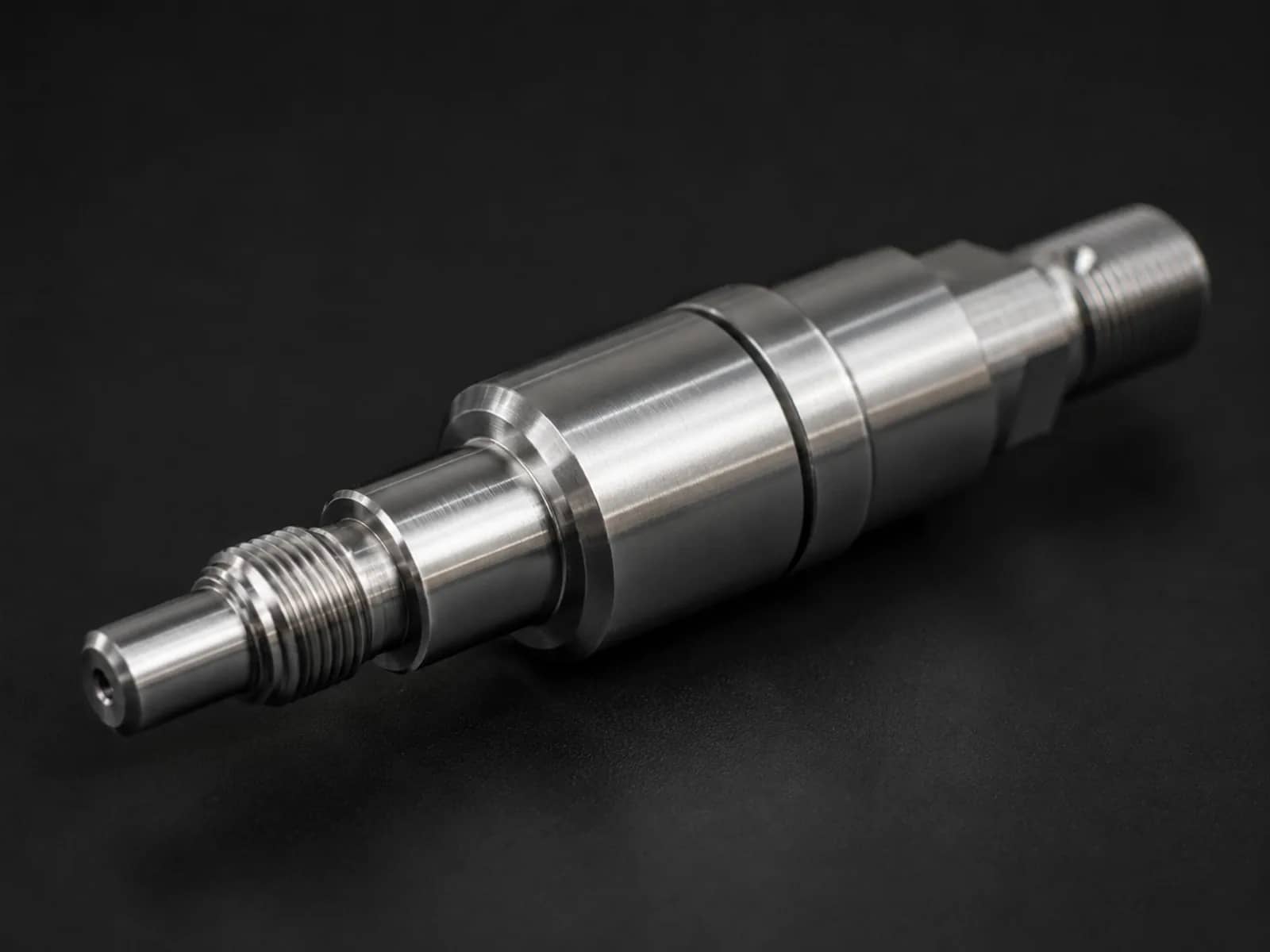
Choose steel for shafts, gears, fixtures, sanitary fittings, and wear tooling that must hold load or survive corrosion better than aluminum. Typical work includes turned step shafts, milled fixture plates, stainless fluid fittings, and hardened inserts finished after heat treatment.
Start with 1045 for heat-treatable carbon structures, 304 for general stainless hardware, 316 for marine or chemical pitting resistance, and tool steel when dies, punches, or wear inserts need higher hardness. Precision iron and soft magnetic steels are quoted only after review of magnetic duty, stock form, and geometry — they are not implied stocked grades.
Match the process to the drawing: turning for round features, milling for flats and pockets, five-axis where a single setup earns its cost, and Wire EDM for hardened or intricate conductive profiles. When the drawing is silent, the common default tolerance is ±0.10 mm; tighter limits are confirmed via DFM.
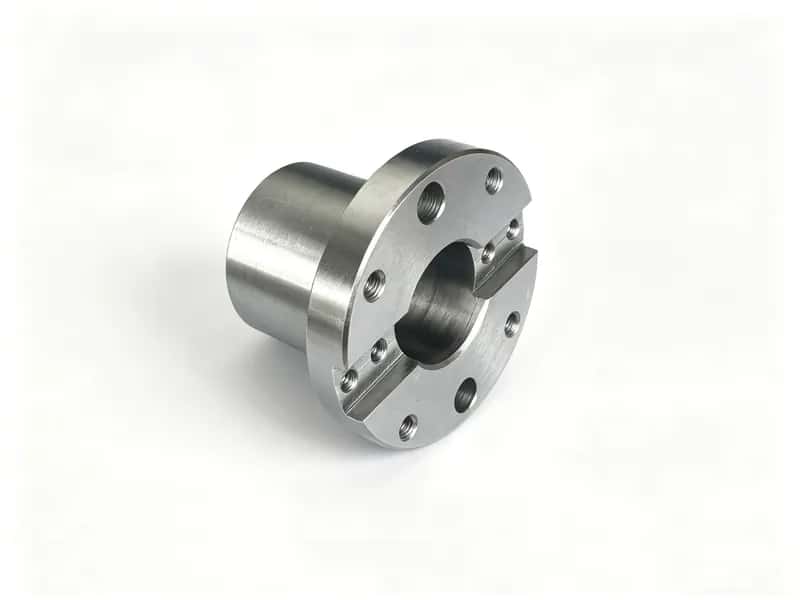
Heat-treatable strength for flange hubs, gears, pins, and automation fixtures. Rough with finishing allowance, then finish after quench and temper when hardness is specified.
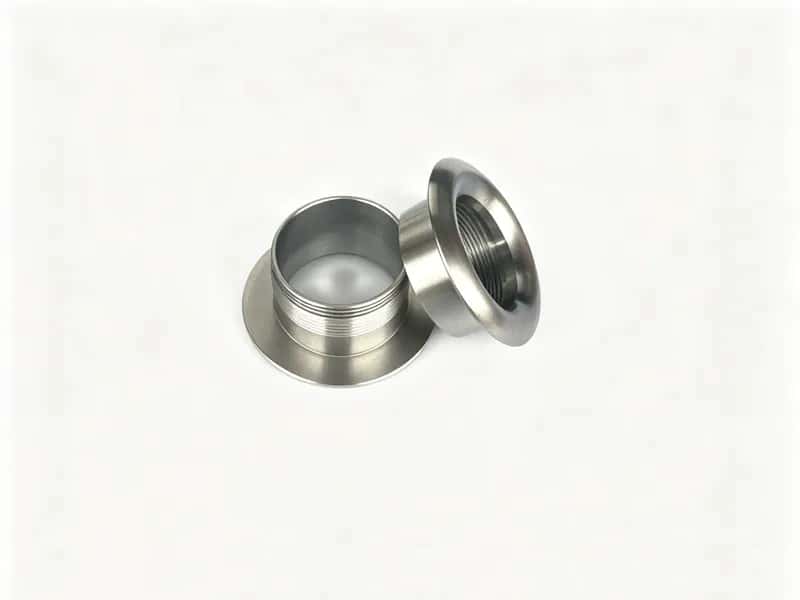
304 for general corrosion resistance and food or electronics hardware; 316 for marine, chemical, and higher pitting resistance. Sharp tools and consistent depth of cut limit work-hardening.
| Grade/family | Choose it when | Machining watch-outs | Condition to specify | Compatible secondary operations |
|---|---|---|---|---|
| 1045 Carbon Steel | Shafts, gears, and fixtures that need heat-treatable strength | Tool wear after hardening; residual stress; quench movement | Supplied vs quench/temper hardness and sequence | Stress relief, quench/temper, black oxide, plating — coordinated |
| 304 Stainless Steel | General corrosion resistance for food, electronics, and mechanical hardware | Work-hardening; gummy chips; burrs on threads and bores | Annealed or other mill condition; passivation if required | Passivation, blast, brush, electropolish — coordinated |
| 316 Stainless Steel | Marine, chemical, or higher pitting-resistance environments | Same work-hardening rules as 304; slower stock removal | Grade and environment (chloride/chemical exposure) | Passivation, electropolish, blast — coordinated |
| Tool Steel | Dies, punches, and wear inserts that need high hardness after treatment | Hard stock and EDM finishes; leave grind/EDM stock if specified | Grade, target hardness, and post-hardening finish method | Heat treatment, grind, Wire EDM — coordinated per drawing |
Harder grades raise friction and shorten tool life. Control: coated carbide, planned tool cycles, flood coolant, and finishing after heat treatment when hardness is specified.
304/316 harden under a dull edge and leave burrs. Control: sharp coated tools, consistent depth of cut, high-pressure coolant, and dedicated finish passes.
Cutting heat and prior stress move datums. Control: staged rough-to-finish, flood cooling, stress relief when agreed, and metrology after the part stabilizes.
Quench/temper can shift bores and flats. Control: finishing allowance, specified sequence, then CNC, grind, or Wire EDM on hardened features as the drawing requires.
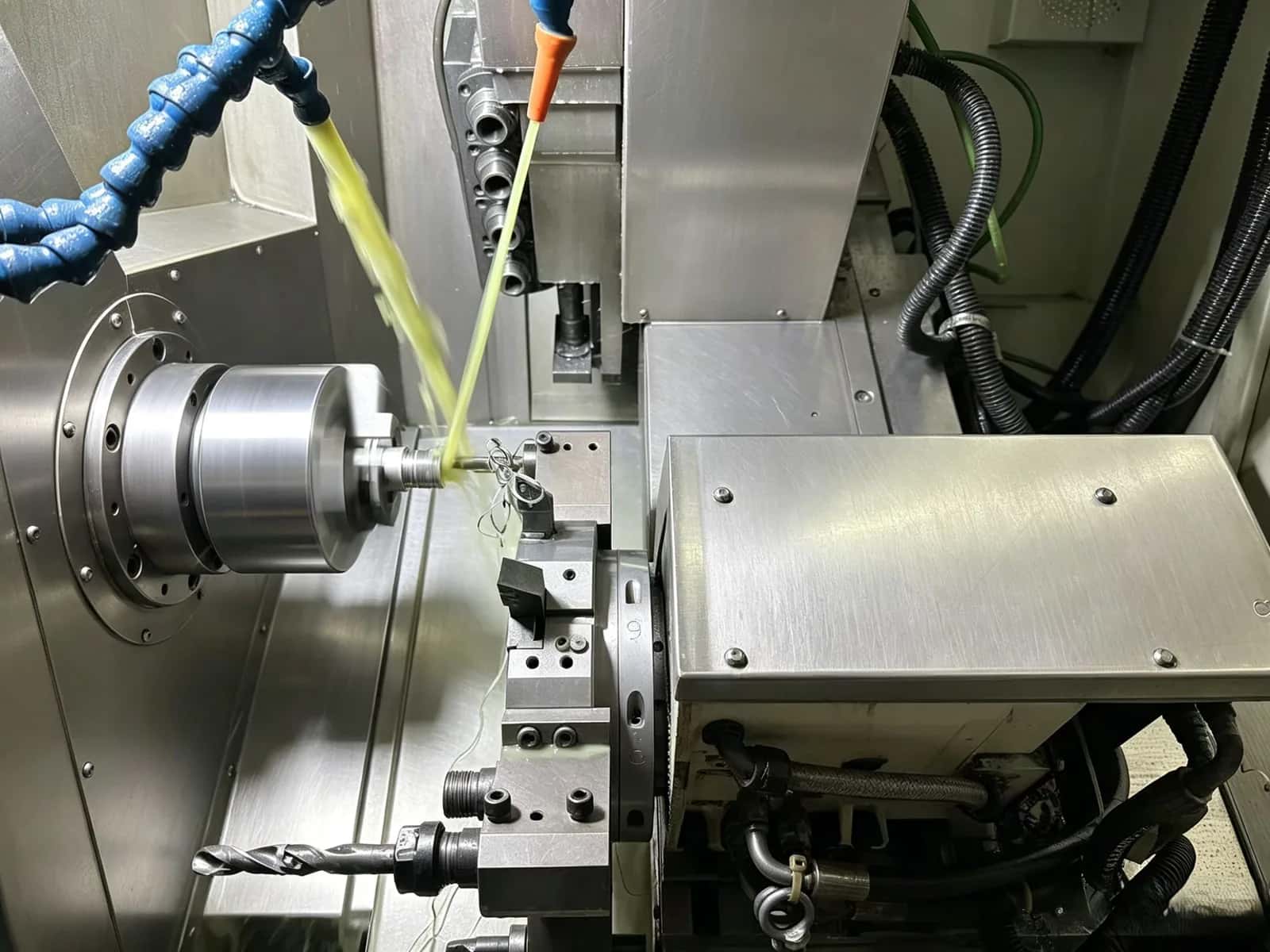
Live turning with dual coolant streams shows heat and chip control on steel shafts. The flange hub and stainless fittings on this page are representative parts for grade selection, not a named customer program.
Steel holds size well on rigid sections, but hardness, residual stress, and heat-treat movement still shift datums. ±0.10 mm is the common default when a metal drawing is unspecified. ±0.01 mm and ±0.005 mm apply only to selected features where grade, geometry, and DFM or the drawing confirm them — not as blanket commercial defaults. Stainless work-hardening and post-hardening finishing often set the real limit more than the mill grade name.
In-house CNC machining and agreed-scope pre-shipment inspection verify critical characteristics. "100% inspection" means the agreed characteristic scope, not CMM of every feature. FAI, MTR, CoC, and material traceability are available when agreed for the project. Metrology can include ZEISS SPECTRUM CMM, optical comparators, and spectrometers when required. See Precision & Tolerance Standards and Quality Control.
Stress relief, quench and temper, passivation, black oxide, plating, blasting, brushing, and electropolishing are available or coordinated per project. Specify supplied versus hardened condition, target hardness, sequence, coating allowance, and masked critical fits. Hardware install can ship with the same order when specified. Details: CNC surface finishes.
Send a package that lets engineering quote without guessing:
Upload CAD via Request a Quote. The Material field can be prefilled and remains editable.
Upload CAD for DFM review with steel context prefilled. We typically respond within one business day when the package is complete.