
Gummy chips on pure copper
Soft ductile chips clog flutes and weld to the edge. Control: sharp high-rake tools, high-pressure coolant, and planned chip clearance for clean contact faces.
Use copper alloys when conductivity, thermal transfer, or free-cutting brass volume work drives the design. Start with C110, C360-class brass, or phosphor bronze, then confirm alloy, contact faces, and plating in DFM.
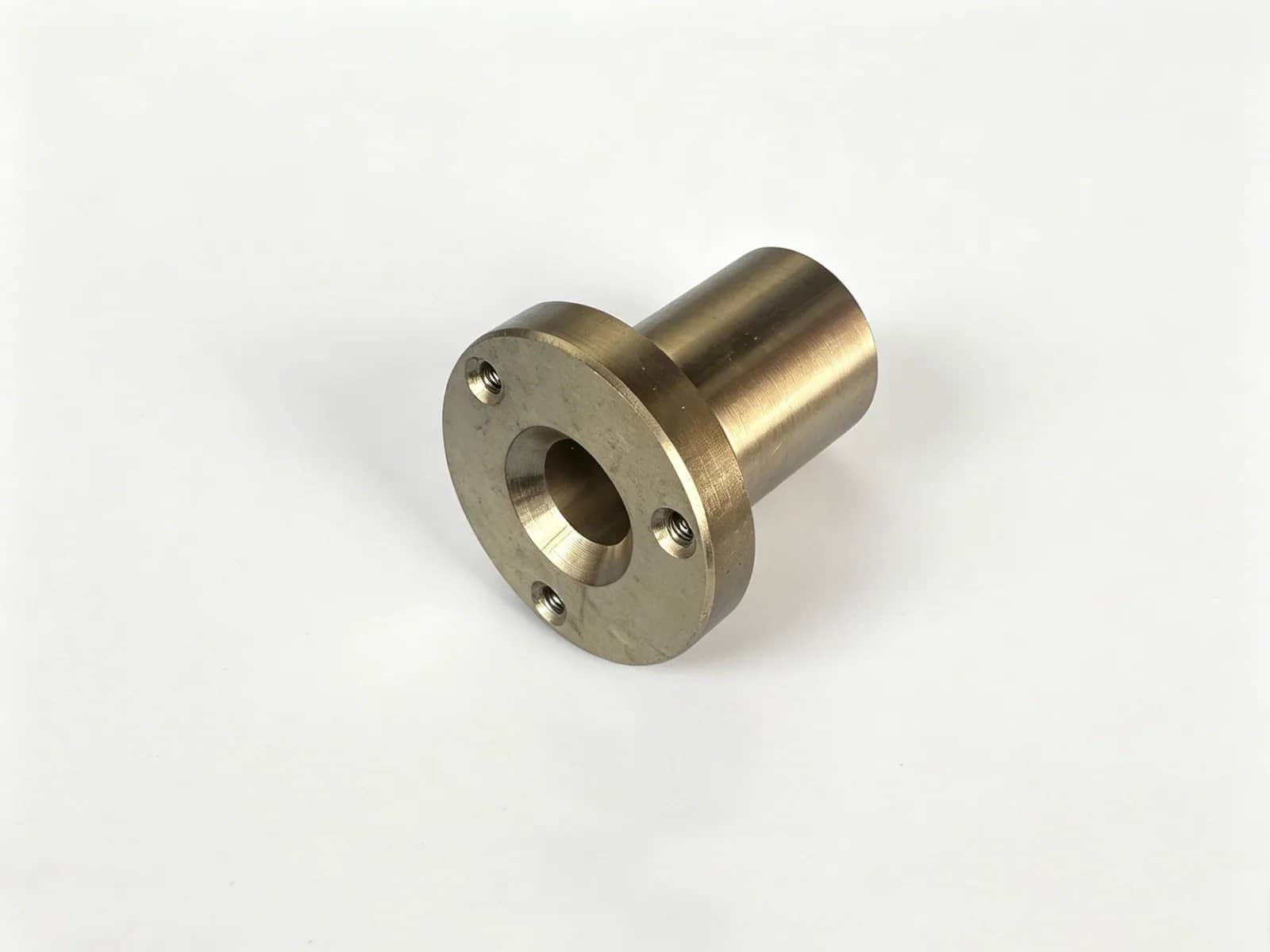
Choose copper alloys for bus bars, terminals, sealing rings, heatsinks, connectors, valve fittings, and elastic contacts. Typical work includes C110 gaskets and contacts, free-cutting brass fittings, and phosphor-bronze wear sleeves.
Start with C110 / ETP when conductivity dominates, C360-class brass for volume fittings and cosmetic threads, and phosphor bronze for elastic or wear contacts. Nickel silver is quoted after review of tarnish resistance, stock, and geometry — it stays in the comparison table rather than as an implied stocked grade.
Process controls differ by alloy: chip evacuation on gummy pure copper, finish control on brass, and springback on bronze. When the drawing is silent, the common default tolerance is ±0.10 mm; tighter limits are confirmed via DFM.
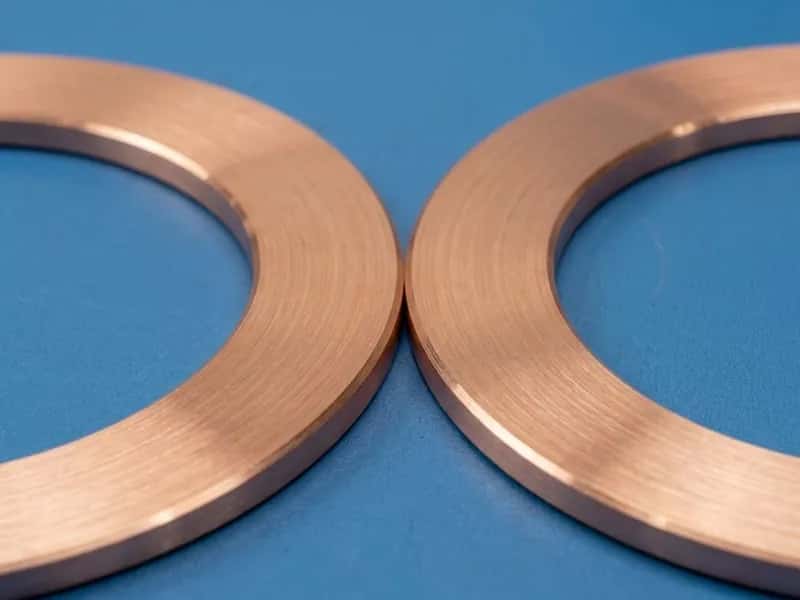
Highest conductivity for gaskets, bus bars, terminal blocks, and RF or power contacts. Soft stock needs sharp tools, flood coolant, and soft-clamp fixtures to protect contact faces.
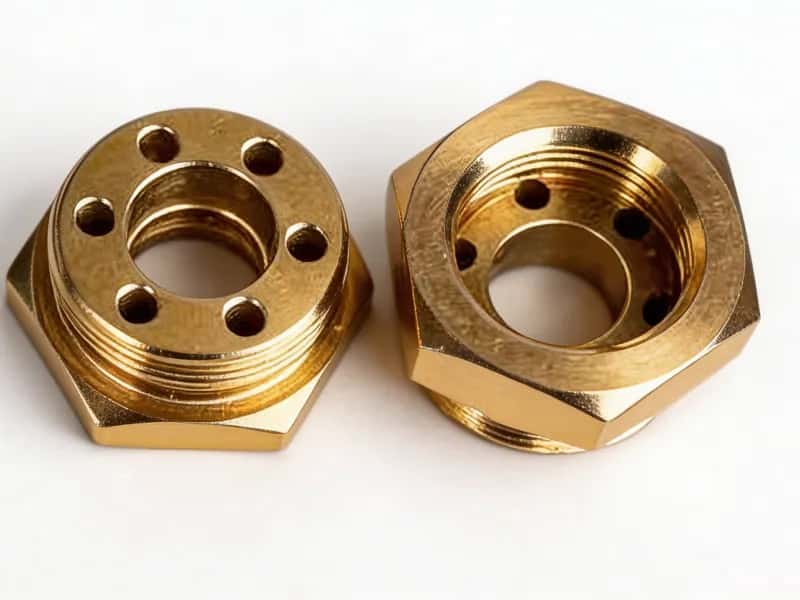
Free-cutting alloys for connectors, valve bodies, fittings, and instrument hardware — the usual starting point for tight bores and cosmetic threads.
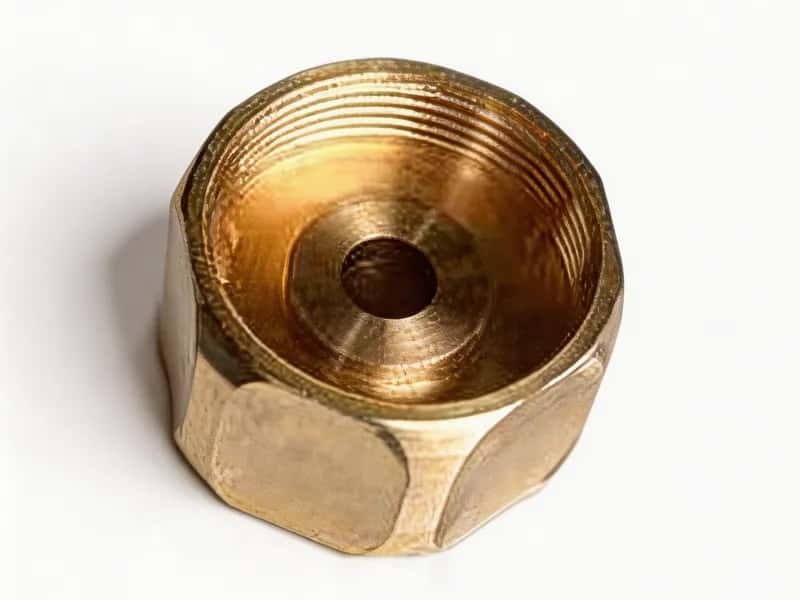
Elastic contacts, spring terminals, and wear sleeves. Programming accounts for springback; low clamp force protects thin walls and contact faces.
| Material | Choose it when | Machinability/watch-outs | Tolerance posture | Typical finish or documentation need |
|---|---|---|---|---|
| C110 / ETP Pure Copper | Bus bars and terminals where conductivity and contact geometry matter | Gummy chips; thermal drift on long flats; soft faces mark easily | ±0.10 mm default; tighter selected features after DFM | Deburr, polish, tin/silver plate; MTR when conductivity is specified |
| C360-class Brass | Volume fittings, connectors, and cosmetic threads | Excellent free-cutting; zinc smear on long cosmetic runs | ±0.10 mm default; ±0.01 mm on selected rigid features after DFM | Polish, lacquer, nickel plate — coordinated; allow coating build-up |
| Phosphor Bronze | Spring contacts and wear sleeves that need elasticity | Springback; faster tool wear; thin fingers move when unclamped | ±0.10 mm default; feature-dependent after DFM | Deburr; optional plate; call out contact-face roughness |
| Nickel Silver | Tarnish-resistant shields and instrument hardware after review | Stock and geometry dependent; not treated as a default stocked grade | Confirmed via DFM | Finish and documentation agreed per project |
Soft ductile chips clog flutes and weld to the edge. Control: sharp high-rake tools, high-pressure coolant, and planned chip clearance for clean contact faces.
Heat races into C110 plates and long bus bars. Control: intermittent cuts, flood cooling, symmetric roughing, and size checks after temperature stabilizes.
Burrs and oil on pads raise resistance. Control: dedicated deburr, protected pads through handling, and cleanliness notes on electrical or sealing faces.
Elastic recovery moves thin fingers and sleeves. Control: springback allowance, supported fixtures, low clamp force, and finish passes on contact surfaces.
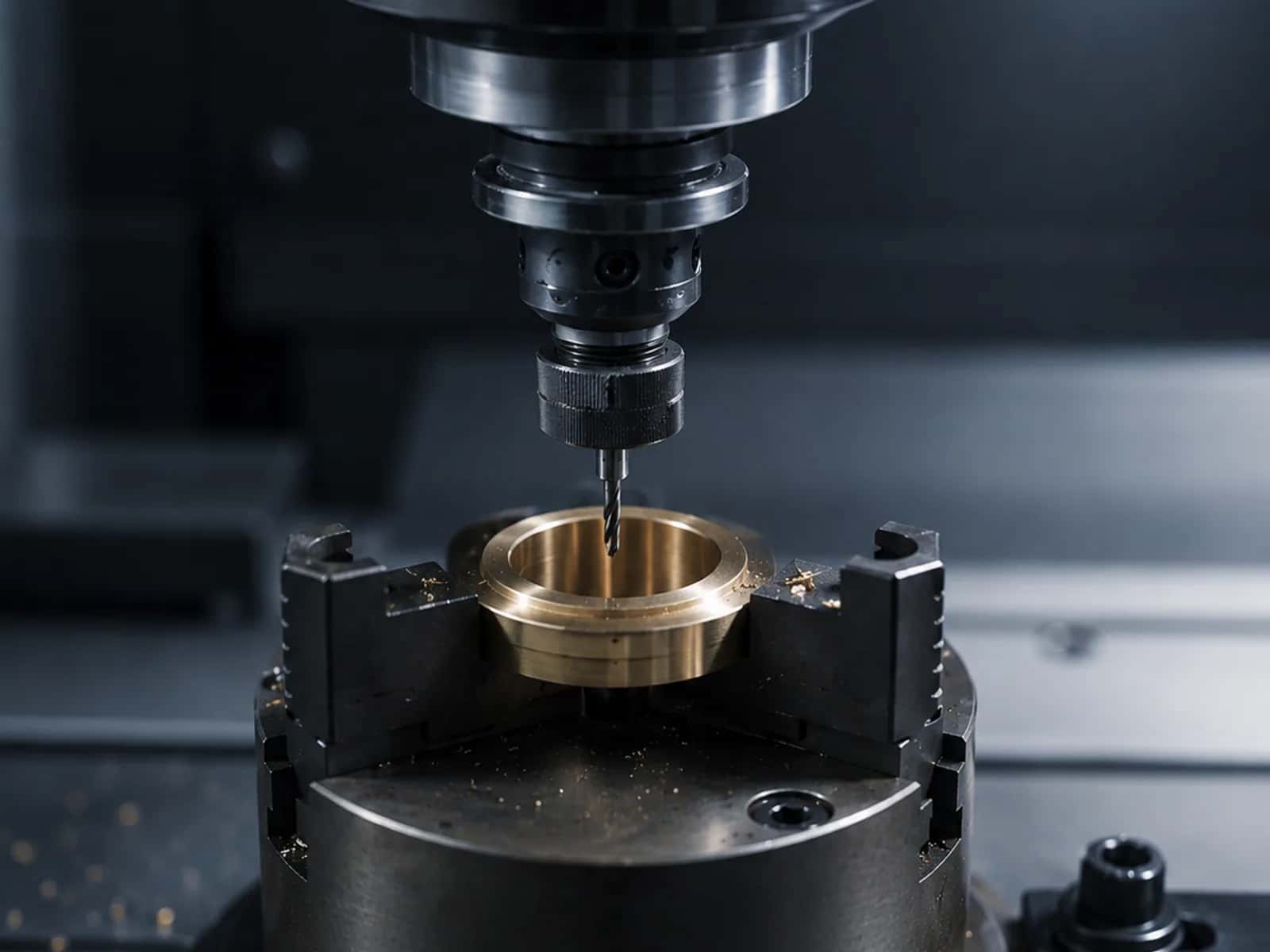
Fine drilling of a brass ring on a rotary fixture shows copper-alloy chip control in a production cell. Finished copper rings and brass fittings on this page are production photography, not alloy certification.
Copper alloys hold size on rigid brass fittings more readily than on thermally sensitive C110 plates. ±0.10 mm is the common default when a metal drawing is unspecified. ±0.01 mm and ±0.005 mm apply only to selected features where alloy, geometry, and DFM or the drawing confirm them. Brass is typically the most capable family; pure copper is the most thermally sensitive.
In-house CNC machining and agreed-scope pre-shipment inspection verify critical characteristics. "100% inspection" means the agreed characteristic scope, not CMM of every feature. FAI, MTR, CoC, and material traceability are available when agreed for the project. Metrology can include ZEISS SPECTRUM CMM, optical comparators, and spectrometers when required. See Precision & Tolerance Standards and Quality Control.
Deburring, polishing, lacquer, and nickel, tin, or silver plating are available or coordinated per project. Specify conductive contact faces, coating thickness, masking, and surface-roughness requirements. Hardware install can ship with the same order when specified. Details: CNC surface finishes.
Send a package that lets engineering quote without guessing:
Upload CAD via Request a Quote. The Material field can be prefilled and remains editable.
Upload CAD for DFM review with copper-alloy context prefilled. We typically respond within one business day when the package is complete.